Understanding the basics: Website vs Landing Page
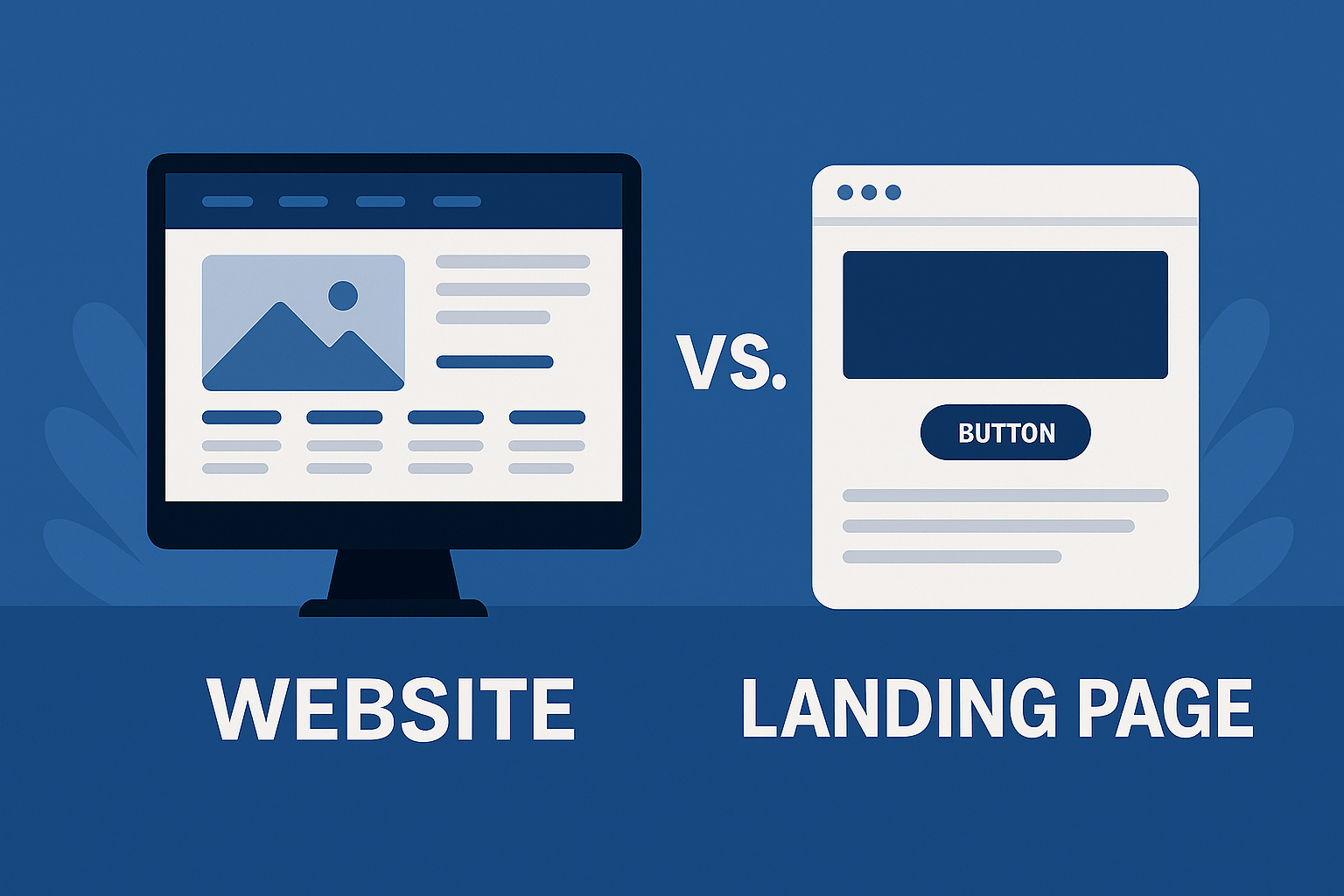
Website vs Landing page
In digital marketing, people often confuse websites and landing pages. While both exist on the web and share similar technical structures (HTML, CSS, hosted online), they serve very different purposes. When to use a landing page?
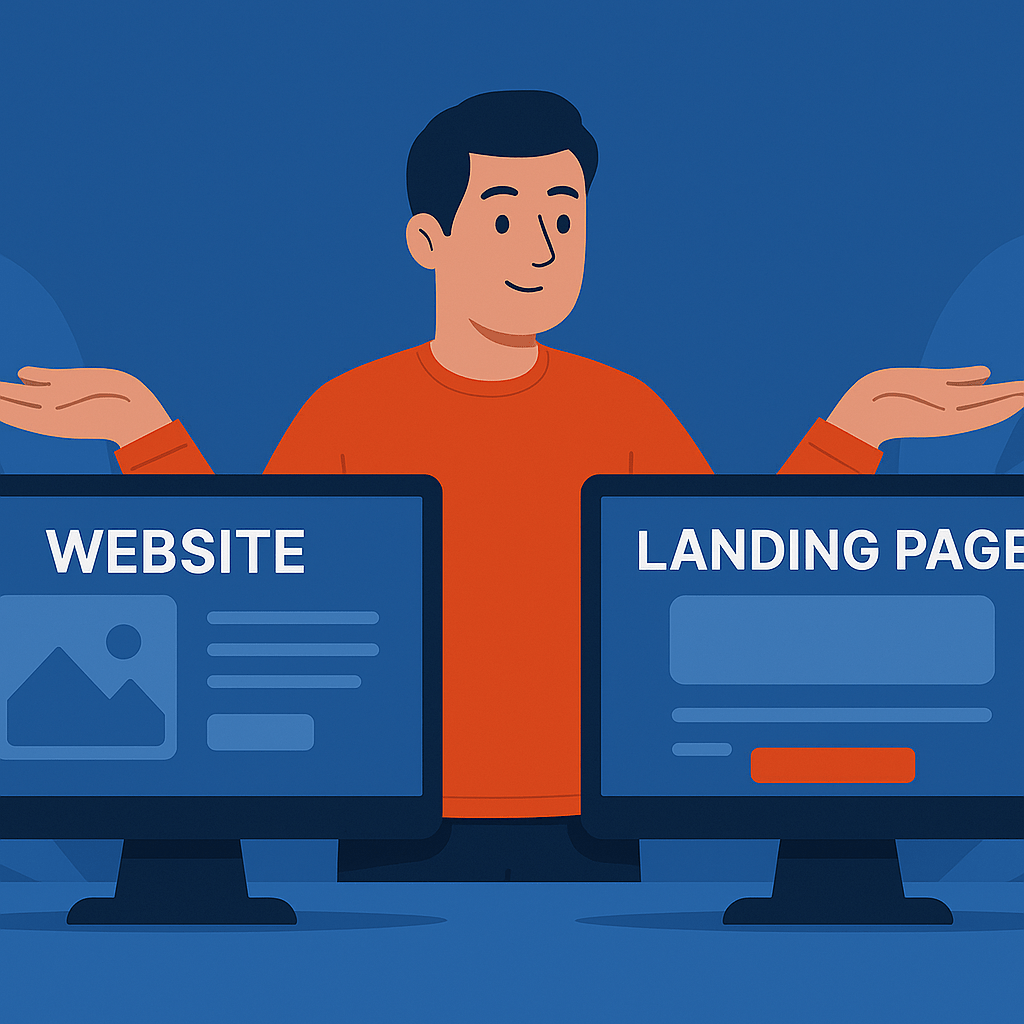
Understanding the difference website vs landing page helps you:
- Build better marketing funnels
- Improve conversion rates
- Use the right tool for the right job
Let’s break them down clearly.
What Is a Website?
A website is a collection of interconnected pages, designed to present a full online presence for a person, brand, or business.
Examples of a website:
- A company homepage with About, Services, Contact pages
- A personal portfolio with blog and gallery
- An e-commerce store with product pages
Key characteristics of a website:
- Contains multiple pages
- Includes a navigation menu
- Designed for browsing and exploration
- Meant to inform, educate, or build credibility
- Usually optimized for SEO and long-term visibility
Think of a website as your digital storefront or headquarters.
What Is a Landing Page?
A landing page is a single, focused web page designed to drive one specific action usually conversion.
It could be:
- Signing up for a newsletter
- Registering for a webinar
- Purchasing a product
- Downloading an eBook
Landing pages are:
- Standalone (not part of site navigation)
- Highly targeted toward a specific goal or campaign
- Often built for ads or email funnels
- Short, persuasive, and optimized for conversion
Think of a landing page as your digital salesperson, guiding a visitor to take one very specific action without distractions.
Key Differences in Design, Structure, and Use
Understanding the technical and strategic distinctions between a website and a landing page helps clarify when to use each. Let’s explore the main differences across several core areas:
1. Purpose
- Website: Meant to inform, showcase your brand, and serve as a long-term online presence. Often includes a mix of informational, promotional, and service-related content.
- Landing Page: Designed to convert whether that means generating leads, signups, or purchases. Every element is optimized for a single call-to-action (CTA).
2. Navigation
- Website: Includes a header with navigation links to multiple sections (e.g., About, Blog, Services). Users can explore freely.
- Landing Page: Typically has no menu or external links. The focus is on keeping the user on that one page until they take action.
3. Design Style
- Website: Can be broad and modular, designed to reflect your brand identity across various pages. It may contain carousels, galleries, and complex layouts.
- Landing Page: Uses a clean, direct layout. It often includes:
- A compelling headline
- A short body of persuasive text
- Testimonials or trust elements
- A form or CTA button
The design is psychologically optimized for conversion.
4. Content Length and Depth
- Website: Can include long-form content, blog posts, case studies, and educational material.
- Landing Page: Short and to the point. Only includes what’s essential to convince the user to act.
5. Traffic Sources
- Website: Often attracts organic traffic from search engines, social media, and referrals. Content is usually SEO-optimized.
- Landing Page: Commonly used in paid ads, email marketing, and campaigns. It matches the messaging of the ad or email that brought the visitor.
6. SEO Relevance
- Website: A strong SEO tool. Built for indexing, internal linking, and content depth. A good website helps build long-term traffic.
- Landing Page: Usually not SEO-focused, especially if used in time-sensitive campaigns. Some marketers even block landing pages from search indexing to keep them exclusive to ad funnels.
When to use a Website vs Landing Page
Use a Website when you need:
- A full online presence for your brand or business
- A place to host your blog, portfolio, services, or store
- SEO content that ranks in Google and builds long-term traffic
- A hub for multiple audiences and entry points
- A structure that supports growth and internal linking
If you’re building a long-term asset to establish trust, a full website is the right tool.
Use a Landing page when you want:
- To promote a specific campaign, product, or offer
- To convert cold or warm leads from ads or email marketing
- A distraction-free environment to drive one action
- Better tracking and A/B testing for marketing funnels
- High conversion rates with minimal content
If you’re running an ad campaign or lead magnet funnel, a landing page will often outperform a homepage.
Choose the right tool for the right goal
Websites and landing pages are both essential tools in the digital world, but they’re built for very different purposes. We have seen the difference Website vs landing page
Think of your website as your online headquarters, and your landing page as your digital salesperson.
You don’t need to choose one over the other in fact, most successful businesses use both:
- A website for brand visibility and SEO
- Landing pages for targeted conversion
By using the right format for the right job, you can improve your marketing results, enhance user experience, and grow more efficiently online.